German Shepherds reveal how breeding may shape personalitySanjana Gajbhiye Fri, November 13, 2026 at 2:37 PM UTC
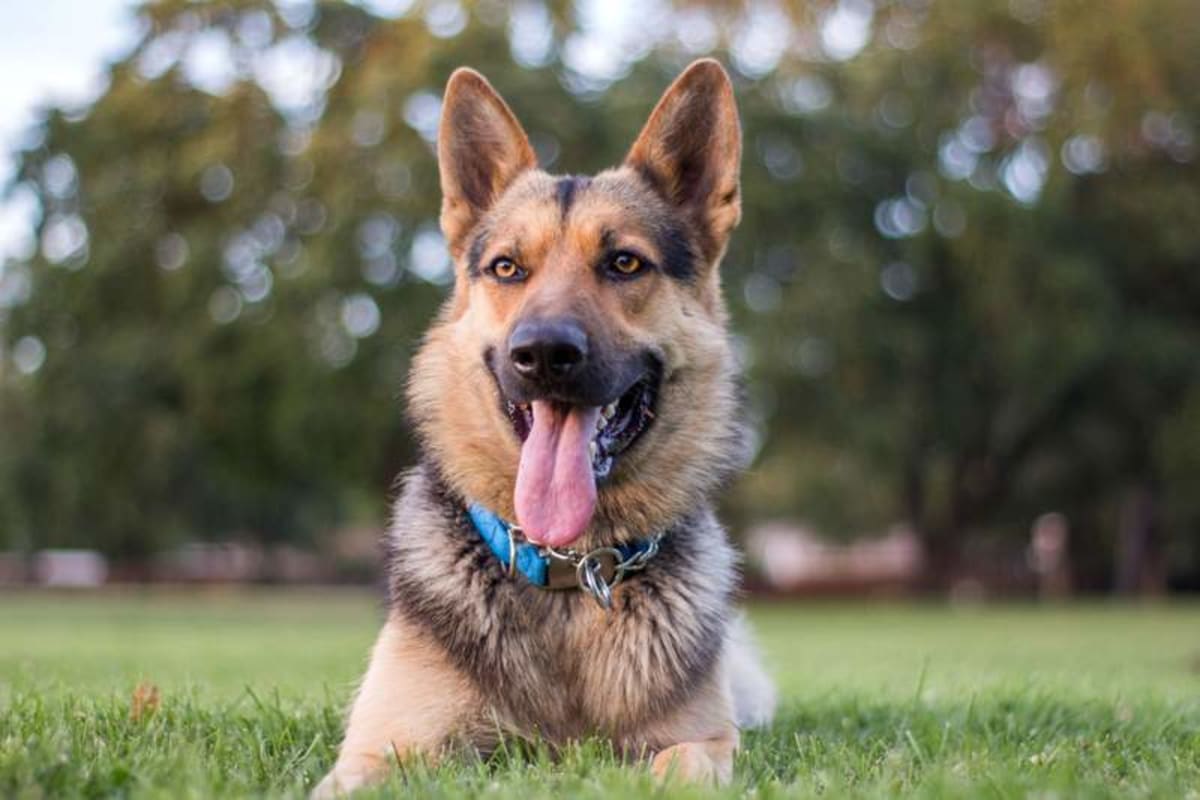
Researchers are studying German Shepherd genes to better understand differences in behavior. Credit: Shutterstock
German Shepherds are often used by police and military teams for guarding, searching, and detecting threats. But training these dogs takes time and money, and not every dog is suited for the job.
This raises an interesting question: How much of a dog’s behavior comes from its genes?
A new Swedish study found that German Shepherds bred for work differ from those bred for dog shows, both in their behavior and DNA.
The research was led by Voichita Marinescu of Uppsala University, along with scientists from the Swedish University of Agricultural Sciences, the Swedish Armed Forces, and the Broad Institute of MIT and Harvard.
Working lines and show lines
German Shepherds first appeared in Germany in the late 1800s, with the first breed club formed in 1899.
By 1909, dogs bred for work already looked different from those bred for shows.
Show dogs are mainly bred for their appearance, including a sloping back and angled legs.
Working dogs, however, are bred for their skills and ability to perform tasks.
A standard behavior test
Sweden has a rare advantage for studying dog behavior in large numbers, namely the Dog Mentality Assessment (DMA), which the Swedish Working Dog Association created as a breeding aid.
In it, dog and handler pass through 10 stations in turn.
The dog gets an invitation to play, a tug-of-war game, and a toy that suddenly runs off. There is also a sudden startle, handling by a stranger, and figures dressed as ghosts that approach it.
No dog passes or fails. Instead, a trained rater scores 33 behaviors from 1 to 5, simply to describe how each one reacts.
Boldness ties the traits together
As a first step, DMA results were analyzed for 23,109 German Shepherds registered with the Swedish Kennel Club.
Six personality traits were confirmed in those records, namely sociability, playfulness, chase-proneness, distance playfulness, curiosity/fearlessness, and aggressiveness.
Aggressiveness, however, stood apart from the rest. The other five were bound up in a broader trait known as boldness (which the authors liken to the reverse of neuroticism in humans).
Boldness is also partly inherited. In fact, a 2006 study by Saetre and colleagues in Genes, Brain and Behavior put its heritability in German Shepherds at 0.25.
In other words, about a quarter of the variation in boldness between dogs was linked to genetic differences.
Two clusters in the DNA
Researchers then studied DNA from 373 dogs that had completed the behavior tests.
The dogs fell into two main genetic groups: 222 working dogs and 132 show dogs, while 19 fell between the groups.
All police and military dogs belonged to the working group, while all Swedish show champions belonged to the show group.
The biggest genetic difference was found on chromosome 24, which contains genes linked to coat color. Around 79% of show dogs were black and brown, while working dogs were mostly gray.
Working dogs scored higher
On boldness, and on every trait apart from aggressiveness, the working dogs scored significantly higher, with playfulness and boldness itself showing the widest gaps.
Åke Hedhammar is a professor emeritus of diseases of dogs at SLU.
“We could see that, on average, the working dogs showed less fear, more curiosity and were able to socialize well with humans,” said Hedhammar.
“This shows how important it is to select for behavior when selecting dogs for breeding for important functional roles in our community.”
Breeding may explain differences
Why are show dogs less bold? The study can’t say, since it might be an adaptation to life as easier-to-handle companions or an unintended side effect of breeding for looks.
The authors suggest that working-line breeders have selected harder for boldness.
A separate survey of 163 breeders (covering 4,131 dogs) also tied show-focused breeding goals to lower boldness.
Kerstin Lindblad-Toh, professor of comparative genomics at Uppsala University, was one of the study’s leaders.
“Breeders of working dogs have selected and bred the ones that really enjoy working; it’s a bit like a game for them,” said Lindblad-Toh.
“It’s interesting that we can now see that this selective breeding has indeed led to differences between working dogs and show dogs among German Shepherds – differences that can be seen at both the behavioral and genetic levels.”
Genes linked to boldness and fear
Across the genome, links to 40 traits and behaviors were tested, and 28 turned up at least one significant association.
The strongest behavior signals came from chromosome 1, in and near a gene called TCF4. Its protein helps control the activity of many other genes, some of them involved in brain development.
In show dogs, that region was associated with boldness, distance playfulness, and tug-of-war. In people, TCF4 variants have been associated with neuroticism, schizophrenia, bipolar disorder, major depression, and PTSD.
Among working dogs, how long a dog took to recover after a frightening experience was linked to a region on chromosome 15, near a gene called ELAVL4.
“It’s interesting that several of the genes that we identified as influencing behavior in German Shepherds are also linked to that behavior in humans,” Lindblad-Toh said.
“So we now have an example of how we might also acquire more knowledge about different behaviors in people with help of dogs in the long term.”
The study linked genes to dog behavior but did not prove cause and effect.
The genetic analysis included only 373 dogs, with limited information about their training. Larger studies are needed to confirm the results.
Can DNA guide future breeding?
Larger, independent groups of dogs are needed to confirm the findings, and larger studies are now being planned with the Swedish Armed Forces.
“That would ultimately mean that these findings could be used to select which dogs have the best prospects of becoming good working dogs and which could be used in breeding,” Hedhammar said.
“But we are not there yet. This study is just a first step and shows that there are actually clear differences in behavior between working German Shepherd dogs and German Shepherd show dogs.”
The full study was published in the journal Animal Genetics.
—–
Like what you read? Subscribe to our newsletter for engaging articles, exclusive content, and the latest updates.
Check us out on EarthSnap, a free app brought to you by Eric Ralls and Earth.com.
—–
Source: Nature



0 Comments